

A Complete Guide to Coconut Oil and It’s Benefits
Coconut oil is a useful oil and benefits heart, great for oral health, and used for skin and hair care. We extract Coconut oil from the edible, fleshy “meat” of a coconut which is actually the “kernel” of the coconut. We extract this oil through a variety of methods. So, you’ll find different coconut oil, including virgin and unrefined. The Complete guide of coconut oil includes the origin, types, health benefits, side effects and dosage of coconut oil.
By composition coconut oil contains a cornucopia of fatty acids and proteins. It also holds antioxidants and provide myriad health benefits. This oil is rich in so-called medium-chain fatty acids (MCFA’s) or Medium Chain Triglycerides (MCT). Thes fatty acids include Caprylic acid, Lauric acid and Capric acid.
Approximately 60% of all coconut oils comprises of the above three fatty acids. Rest 90% of coconut oil fats comprises heart-healthy saturated fats. The latter figure is high, and not one that is recommendable to many doctors. For example, 14% of olive oil calories come from saturated fat, and 63% of butter’s calories come from saturated fats.
The Origin of Coconut Oil
The first recorded coconut sighting was from Costas, an Egyptian traveler in the 5th century A.D.He wrote about finding an “Indian nut” that many scholars today believe was the coconut. In the 9th century there are more reports of coconuts being used in China to make fibers in the market. They talk coconuts about in the story of Sinbad the Sailor in the 1,001 Arabian Nights stories. Marco Polo referred to coconuts as “nux indica” in the year 1280. Finally, in the 1700s, the Portuguese gave the coconut the name it uses.
Types of Coconut Oil
Coconut oil is the darling of “clean” eating. Proponents claim we have maligned this saturated fat for years. It is one of the most ideal oil for frying, cooking and supplemental energy in smoothies. But, if you want to jump on this bandwagon, buying coconut oil isn’t as easy as you may think.
You have many choices, including jars marked “refined” and “unrefined or virgin.” Both versions offer benefits, but you’ll notice a difference in taste, appearance and nutritive value.
1. Virgin Coconut Oil
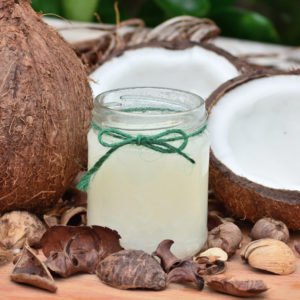
Virgin or extra-virgin, coconut oil comes from the first mechanical pressing of fresh, raw coconut. The flavour and taste depends upon extraction method. More heat exposure during extraction, produces more coconut flavour in the oil.
Coconut oil undergoes a process called “wet milling.” Oil extracted from fresh coconuts are then spun down in a centrifuge without bleaching. This makes unrefined, also known as “virgin” or “pure,” the least processed form of coconut oil available.
With less refinement, you get a bigger coconut flavour. Plus, you also receive more nutrients. When coconut oil is in refine state, the baking and bleaching reduce the number of polyphenols and MCT’s. These compounds offer the antioxidant and anti-inflammatory benefits.
Thus, unrefined coconut oil may be better if you’re taking it to boost your health. Refined coconut oil isn’t devoid of these nutrients, it has fewer.
Virgin or extra virgin or expeller pressed are the terms used interchangeably most of the time. So a machine has pressed the oil from the coconut flesh, often with the use of steam or heat. “Cold-pressed” means that they have pressed the oil without heat.
2. Refined Coconut Oil
Made from dried coconut, also known as copra; the standard end product made from the dried kernel (meat) is RBD oil. It stands for refined, bleached and deodorized. The reason the oil has to undergo this process is that the dried copra is not fit for consumption. And the oil needs to undergo processes to filter our impurities and to make it more stable. It’s a common way to mass-produce coconut oil. Because it’s refined, it’s tasteless and doesn’t smell like coconut. It can withstand higher cooking temperatures before it reaches its smoke point. It is great for deep-frying foods without the flavour of coconut.
It’s not as great as the virgin, raw coconut oil but still has the same beneficial medium-chain fatty acids. From what I read, it’s very close in its nutritional value to virgin coconut oil. But it’s more about the extraction method and what chemicals they have applied.
Most of the coconut oils available in grocery stores and vitamin stores have refined versions. Check the label before buying the product. Not, all refined oils are equal. So try to get good quality, non-hydrogenated and refined version.
Refinement is better using natural, chemical-free process like steam or diatomaceous earth. Refined oil is great if you’re on the budget as it’s usually cheaper. It’s also good for things which need lots of oil like deep-frying, using it as a bath oil or in soaps, or using it as a body moisturiser.
The Benefits of Coconut Oil
Coconut oil offers a host of health benefits that range from improving people’s skin to enhancing the fullness of their hair, and even weight loss!
Keep reading to discover the many health benefits of coconut oil.
1. Cardiovascular Health
Coconut oil is high in saturated fats with a higher content of MCT’s. These fats can boost fat burning when used with a well-balanced diet and exercise program. It provides your body and brain with quick energy. Coconut oil raises the good HDL cholesterol and doesn’t not cause an increase in bad LDL cholesterol in your blood. [Study]
2. Immune Booster
Coconut oil contains lauric acid and caprylic acid, which are essential to strengthen the immune system of an organism. These acids can fight off the bacteria and viruses that can cause health issues and disease.
Coconut oil not only contains nutrition but also MCT’s. There are various benefits of coconut oil as it has antioxidant, antifungal, antibacterial, and antimicrobial properties which help to keep you healthy and immune.
3. Metabolic Support
Coconut oil can boost one’s metabolism. All coconut oil comprises MCT’s which will help increase our body’s normal metabolism processes. The reason it is effective is that the MCT’s present from the oil are easily digested and changed into energy. This characteristic prevent it from being stored in our bodies in comparison with fat like long-chain fat (LCFA’s). Our body has difficulty digesting and absorbing long-chain fatty acids. It makes them circulate in blood and causing an increase in free radical production.
4. Brain Health
One of the most exciting uses of coconut oil is as a potential treatment for dementia and Alzheimer’s disease. Alzheimer’s disease is now referred to as type 3 diabetes. In this disease, brain cells become insulin resistant, don’t get the glucose they need, and subsequently die. Coconut oil bypasses glucose metabolism, getting energy directly to the brain cells that need it. It prevents age-related brain decline and impairment. [Study]
5. Digestive Health
The lauric acid and monolaurin present in coconut oil have antimicrobial, antibacterial and antiviral properties. These properties may help in dealing with various bacteria, fungi, and parasites that cause various health issues. It can be an effective treatment to treat candida or other infections. [Study]
6. Dental Health
Coconut oil attacks Streptococcus mutans and Lactobacillus, which are the two groups of bacteria. These bacteria are primarily responsible for tooth decay. Several studies suggest that coconut oil can reduce these bacteria as equal to chlorhexidine. Chlorhexidine is the active ingredient used in many mouth rinses. Coconut oil swishing in the mouth for a few minutes decreases the risk of dental disease. It also wards off any bacteria due to cavity or post tooth extraction. Coconut oil can be used as a mouth rinse. Coconut oil pulling is an effective treatment against plaque and gingivitis. [Study]
7. Weight Loss
For coconut oil and weight loss, it is an effective tool that can play an important role in ketogenic diets to raise ketone levels. In particular, it can decrease abdominal obesity in women. It also aids your body’s metabolic rate. As a fat, it also helps stabilise sugar and insulin levels in the blood. Research shows that different foods affect the body in a different manner.
AT A MORE BASIC LEVEL, COCONUT OIL HELPS YOU LOSE WEIGHT BY:
- Increasing your energy levels
- decreasing the feelings of hunger
- Enhancing your body’s ability to burn fat
- Balancing your hormones
8. Anti-Cancer
Inflammation is a powerful force that can fuel cancer development, aiding and assisting in the tumour’s growth. Coconut oil has anti-fungal, anti-bacterial and anti-viral properties. It aids in eliminating the overgrowth of the pathogenic organism that can most likely lead to inflammation. Recent studies show that coconut oil helps to reduce inflammatory genes expression in animal models.
9. Hair and Skin Health
Coconut oil has been used for ages in India for hair health on a daily basis. It acts as a natural moisturiser for the scalp, prevents dandruff and scaling. It is best to apply oil to the scalp by gentle massaging after a hot shower. The hot shower can open the pores and increase the oil absorption. [Study]
Due to its anti-fungal and anti-bacterial properties, coconut oil benefits skin health. It can be applied for general skin health and also in various skin related issues such as psoriasis, eczema, burns and dermatitis. It can also be used as an emollient and moisturiser for dry skin on daily basis or can be used as a replacement to night creams.
Side Effects and Warning
PREGNANCY AND BREAST-FEEDING
Coconut oil is LIKELY SAFE for pregnant and breast-feeding women when used in the amounts normally found in the diet. But we do not know the safety of using coconut oil in larger amounts. It’s best to stick to food amounts if you are pregnant or breast-feeding.
CHILDREN
Coconut oil is LIKELY SAFE when taken by mouth in amounts found in food. Coconut oil is POSSIBLY SAFE when it applies to the skin. We can use it in children and infants in the short-term. There is not enough reliable information about the safety of taking coconut oil by mouth as medicine in children.
HIGH CHOLESTEROL
There is a concern that coconut oil might increase total cholesterol and “bad” LDL cholesterol. But evidence suggests coconut oil can increase HDL levels and have little to no effect on total or LDL levels.
How much is Safe?
Coconut oil provides valuable benefits, but there are limits to how much you should eat.
In fact, each tablespoon contains 130 calories. Although MCT’s may boost metabolic rate, eating more calories than needed could still lead to weight gain.
Research has shown that coconut oil is most effective when it replaces less healthy fats in the diet. Avoid adding it on top of the existing vegetable or refined fats you’re consuming. Taking about 2 tablespoons daily seems to be the best strategy for optimizing health.
Conclusion
In Nutshell, coconut oil is a natural source of MCT’s, which offer several health benefits. Including 2 tablespoons of coconut oil per day, in cooking or in recipes, is the best way to get these benefits. You can email me or comment below if you have any questions.


