
Female Hormonal Health: Part 1
Female Hormonal Health Part 1
Women are more prone to hormonal imbalances as compared to men. In Female Hormonal Health Part 1 I will talk about an important hormone Cortisol. The Female hormonal system is complex and involves multiple hormones working in sync with each other in a perfect harmony.
There is a negative loop feedback mechanism for most hormones in the body. It means when hormone levels reach their peak, a signal is sent to gland to shut down the production. And when levels reaches below normal the gland again starts producing the hormone. The information to and from the glands is processed via Brain.
Three Most primary Hormones related to Female Hormonal Health
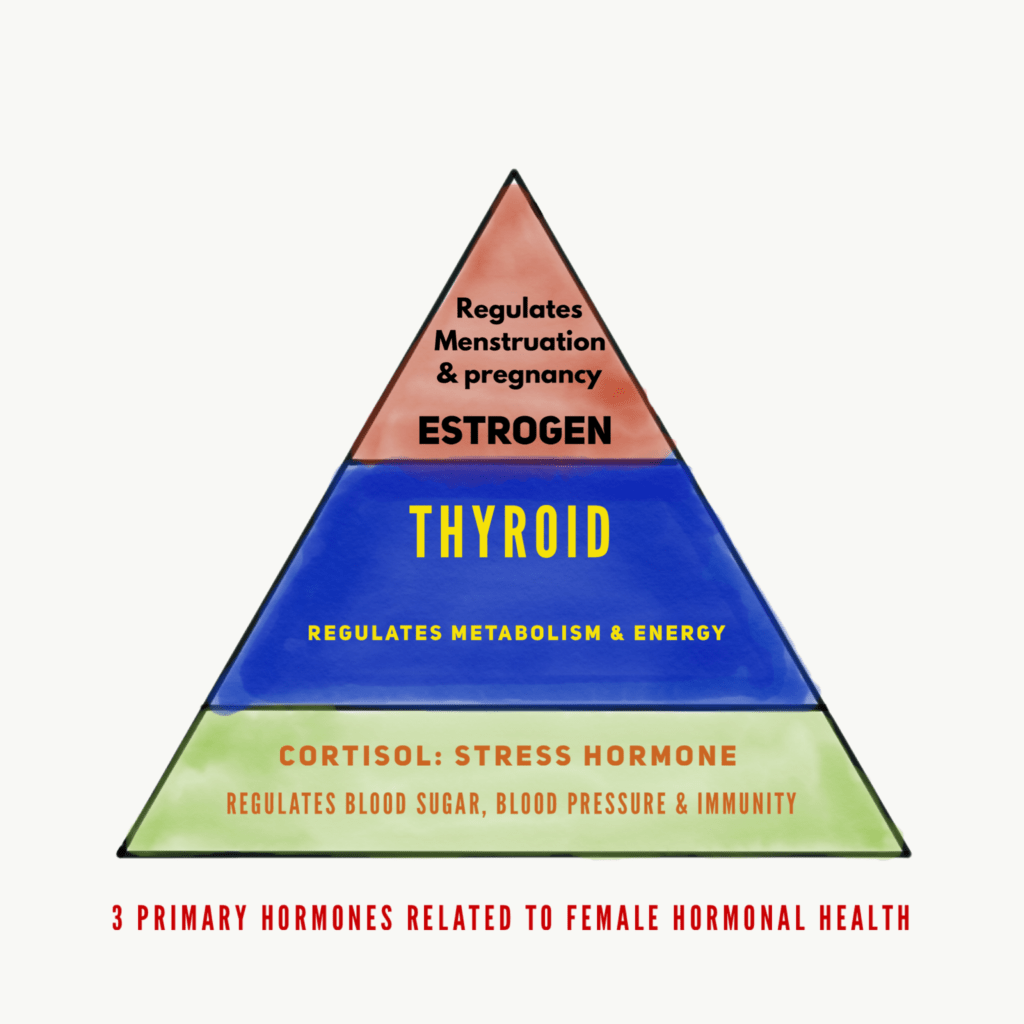
Cortisol is one of the most important hormone. Thyroid comes at second number & estrogen at third because you can survive even if you don’t ovulate.
PART 1: CORTISOL
Understanding Cortisol
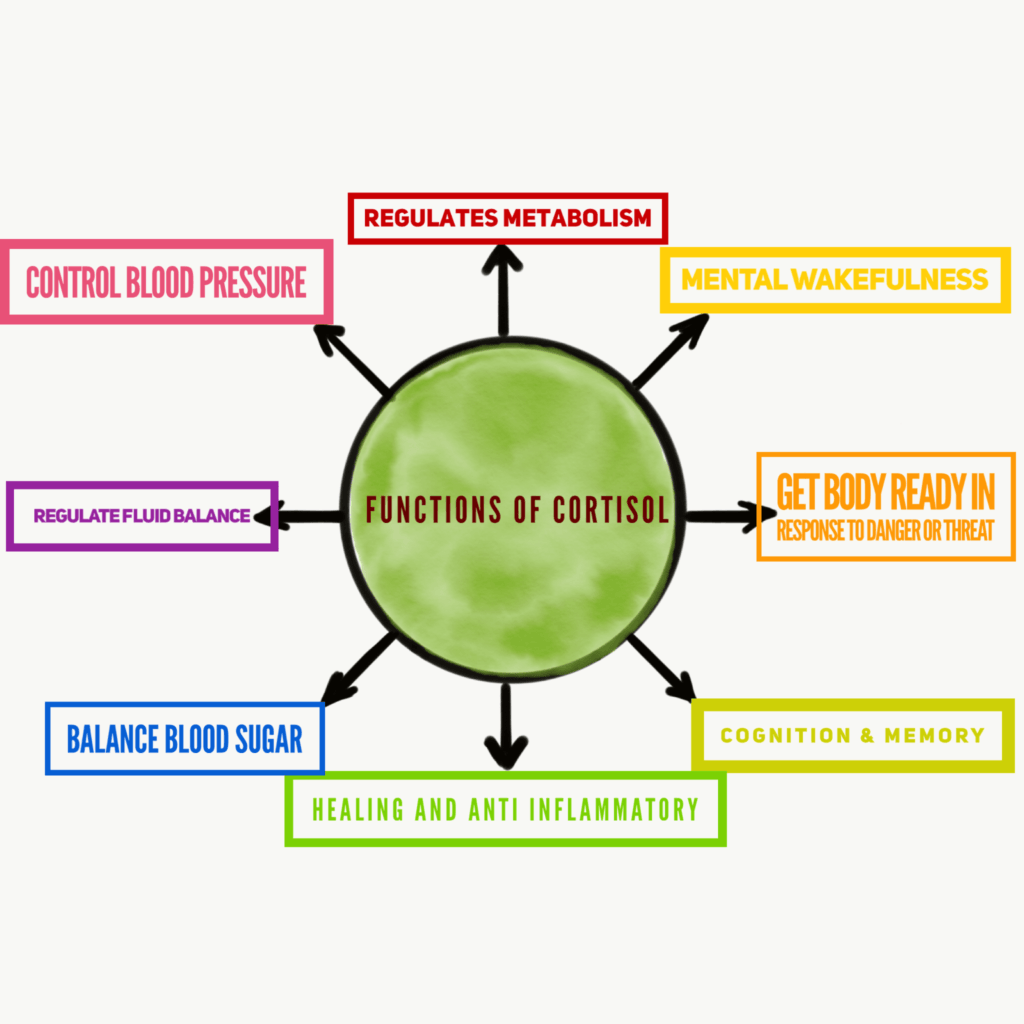
Cortisol is the most misunderstood hormone of all time. It is known as Stress Hormone, produced by Adrenal Glands. Main Functions of Cortisol are as displayed in picture.
– How our body respond to Danger or threat?
When our body perceives that we are in danger or some kind of threat, it goes into flight and fight response releasing cortisol and other hormones like adrenaline and nor adrenaline.
All of them prepare our body to deal with that threat by making these changes in our physiology:
- Increases blood flow to muscles either for running or fight
- Pupil dilation
- Increased heart rate increases
- Rise in blood pressure
- Breathing tract expands for more air intake
- Mobilisation of sugar in the blood
- Inhibition of digestion and defecation
- Urination happens sometimes to empty the bladder so that you can run faster, reflexes inverses, cognition and coordination improve
- Inhibited fertility as it has of no use at the time of survival.
This is a normal response to acute danger or threat for survival. This is the reason why stressed individuals are prone to digestive and immunity issues.
– How or Body deal with low sugar or when we are in fasted state?
When blood sugar level drops due to fasting or blood sugar dysregulation body releases cortisol. Cortisol function is to regulate blood sugar by process known as Gluconeogeneis (forming glucose from other resources such as muscle tissue or amino acids) or converting stored glycogen in muscles or liver to glucose.
Glucose is necessary for optimal functioning of brain and other organs. That’s why people on extended fasting along with excessive cardio lose considerable muscle mass.
– Why Cortisol is important to recover from Injuries and Inflammation?
During injuries there is an inflammatory response which is actually protects us from further damage to the body. Cortisol acts as an anti inflammatory switch to turn it off. Thats the reason why people with low cortisol have difficult time recovering from injuries.
When injuries take long time to heal doctors prescribe corticosteroid drugs like prednisolone or cortisone injection to speed up healing and lower inflammation.
– How Cortisol plays role in memory and cognition?
Cortisol levels rises early in morning causing an increase in glucose levels in fasted state. It supplies that glucose to brain so that you wake up and get ready for the day. It then reaches peak around noon when your memory & cognition is highest.
Gradually it starts declining after 4pm steadily with its levels minimum at night so that you can unwind and ready for sleep. The people having irregular sleep and wake pattern or who have excess caffeine, disrupt this normal cortisol curve pattern affecting cognition and memory considerably.
– How Cortisol affects Female Hormonal Health considerably?
The Cholesterol is precursor to all Sex Hormones. Pregnenolone is the first hormone made from Corstisol. It then conversts into DHEA or Progesterone and then further into different sex hormones as depicted in image here. If the Pregnenolone when shuttled towards cortisol production it affects the production of DHEA and Progesterone.
Low progesterone can cause infertility, poor sleep & irregular cycle. Higher cortisol blocks the progesterone cell receptors making it unavailable for attachment to other hormones.
In test doctor will see normal progesterone levels but the sign of low progesterone will be present and you have difficulty calming down or getting pregnant because of excessive cortisol production.
Under long term stress Pregnenolone is used to make more cortisol which disrupts the normal production of other hormones. This is known as Pregnenolone Steal.
– Body’s adaptation to Stress
Normally our body release cortisol under stressful situations and once the requirement is met the levels return to normal. But under chronic stress, gradually it get into a phase of highs and lows alternatively in random fashion. If this issues goes unaddressed the adrenal gland give up which ultimately leads to suboptimal adrenal function, known as Adrenal fatigue (constant low levels of cortisol). So practically there are two conditions related to Cortisol levels: High Cortisol & Low Cortisol
Reasons for Cortisol Dysregulation (High/Low)
- High Sugar or High Carbohydrate diet
- Trans fat and processed foods
- Excessive Caffeine and/or alcohol consumption
- Excessive exercise or overtraining
- Mental or emotional trauma
- Sleep disturbance
- Obesity
- Nutrient deficiencies
- Depression
- Kidney or liver disease
- Autoimmune Disorders
- Adrenal Fatigue
- Insulin Resistance
- Low calorie diet for extended period
Various conditions and symptoms associated with High Cortisol in Females
- Metabolic disorders – High Fat accumulation around belly, metabolic syndrome, increased fasting glucose. high triglycerides, insulin resistance, diabetes, high blood pressure, risk of cardiovascular disease
- Mood disorders – Depression, anxiety, irritability, poor coordination and cognition, memory decline, wired and stressed feeling
- Sleep disorders – Insomnia, difficulty falling sleep or staying asleep, abnormal wake and sleep cycle, unable to calm down
- Infertility, PCOS, bone loss, muscle loss, skin thinning, ageing,
Ways to lower Elevated Cortisol levels
- Lifestyle – Lifestyle has biggest impact on lowering the cortisol levels alone. It is number one factor if changed or improved, help you to lower your elevated cortisol considerably. It includes managing your sleep and wake cycle, exposure to sun, avoiding bright lights from phone or TV screens after 8-9pm, avoiding horror or thriller movies at night, eating mindfully and chewing properly, incorporating nose breathing, yoga, OM chanting, guided relaxation meditation, acupuncture for releasing stress or massage. You can choose any of these 3-4 techniques to incorporate it on daily basis for positive effects.
- Nutrition – Nutrition is important when you are already going through stress. Under stress your Serotonin levels deplete faster and you start to have craving for foods rich in sugar or carbs to boost it temporarily. This is like a trap and you end up having blood sugar dysregulation and then overtime insulin resistance. Avoid falling into this trap by increasing healthy fats in your diet such as seeds, nuts, oils and avocados rather than sugar, refined carbs or caffeine. Add more leafy vegetables, salads, whole grains, nuts &seeds. Adequate protein in your diet is must and eat your meals on time. Alcohol also depletes serotonin and causes many mineral and nutrient deficiencies.
- GUT – Optimise your GUT by removing any fungal, viral or bacterial infections. Restoration of intestinal flora, removing any sensitive foods and treating leaky gut decreases inflammation and antibodies. By lowering all these you can greatly reduce the inflammation and most importantly the cortisol release.
- Supplements – Certain nutrients and especially herbs have property to reduce the elevated levels of Cortisol. It includes Vitamin C, B5, Phosphatidylserine, fish oil, L-theanine, Ashwagndha, holy basil, magnesium, melatonin and glycine.


